

The Injury
I started the year last year unwell. For the last three months leading up to 2025, I experienced a rollercoaster of lower back pain that came to its worst on New Years Day. I had lower back issues in the past, typically from a heavy/explosive barbell movement that I had no business attempting, but I was always able to shake it off and get back at it after a week or so of rest and recovery. This was not the case.
In the fall of 2024, I attended the “BTY (Better Than Yesterday)” fitness summit in New York City, hosted by one of my favorite brands, Ten Thousand. I left that event feeling great, having made deep personal connections and a renewed energy towards life. Between all the workouts we did that weekend and the travel, I certainly should have taken a day or so for recovery before jumping back in to the gym, but I didn't. I had the most dangerous feeling when I left that event…I felt invincible. And like liquid courage, this type of feeling tends to cloud the judgement.
I jumped right back into workouts at my local Crossfit gym. Monday, a little sore, but showed up. Tuesday, very sore, still showed up. Come Wednesday that week I was planning to rest because my body was giving obvious signals that it needed rest, but it was squat day. I went to the gym that Wednesday, got under the barbell, did a few sets, and right when I started to add some heavier weight, I felt it. Lower back strain. I backed off immediately, knew I had overdone it, and started planning for the next week of recovery, but that didn’t quite happen. A week became two, two weeks became a month, a month became three months, and come New Years Day I was in such agonizing pain I couldn’t walk straight.
Oh, and in the middle of all this, I signed up for another fitness summit in Miami for the last weekend of January 2025, which would conclude with a half marathon….weighted.
It was time for damage control. It was the beginning of January and I was due to run a half marathon, which I had never attempted, with a twenty pound weight vest. I went to physical therapy and was told the problem I was experiencing with my lower back was most likely a bulging disc. After many years and not understanding my back problems, this was the first time it all made sense. It was a lingering injury that always showed up whenever I overexerted myself. Whenever I had pushed my body just hard enough, whether it was a single explosive movement or constantly overdoing it, the disc would protrude and touch my nerve which is what gave me the terrible spasms.
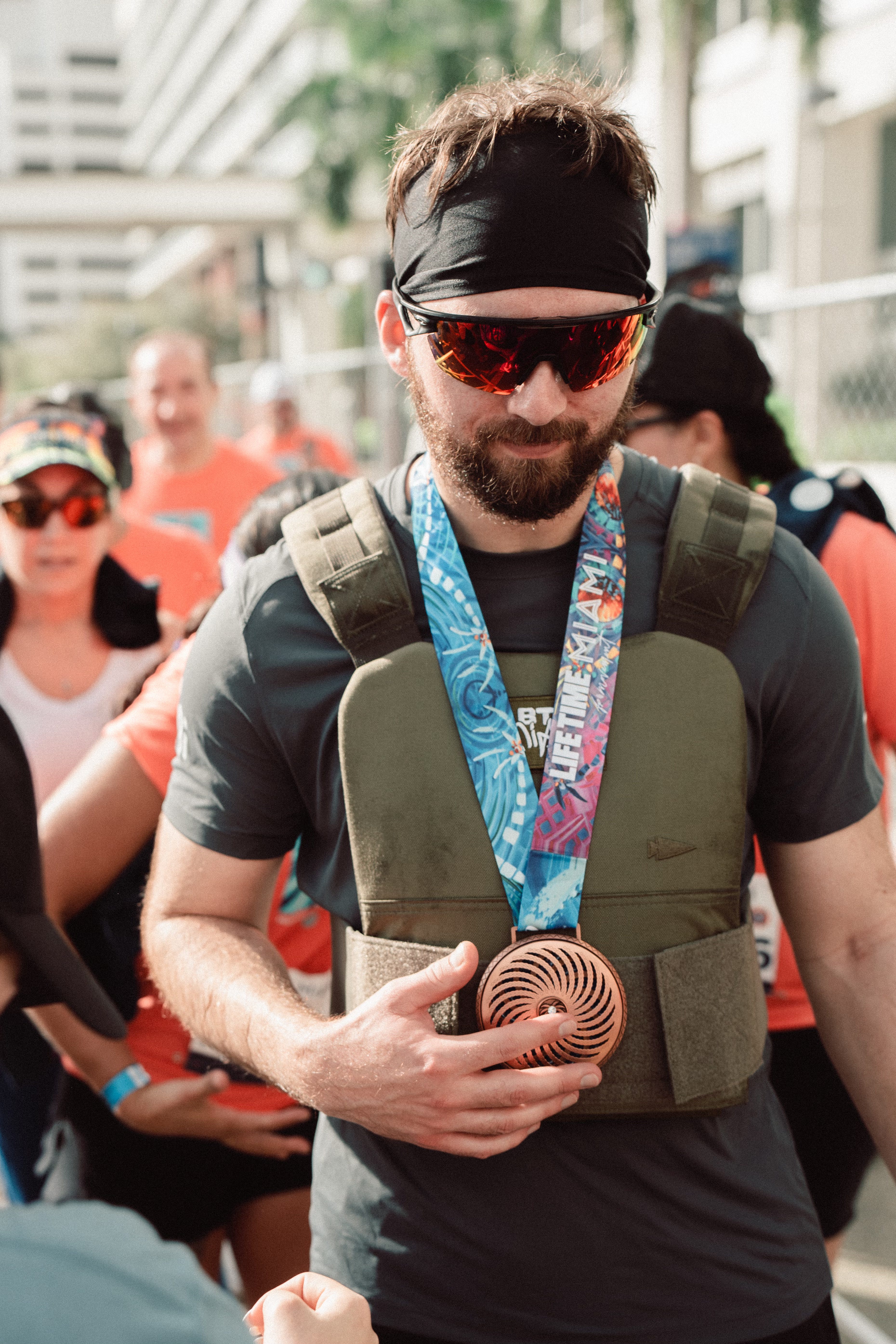
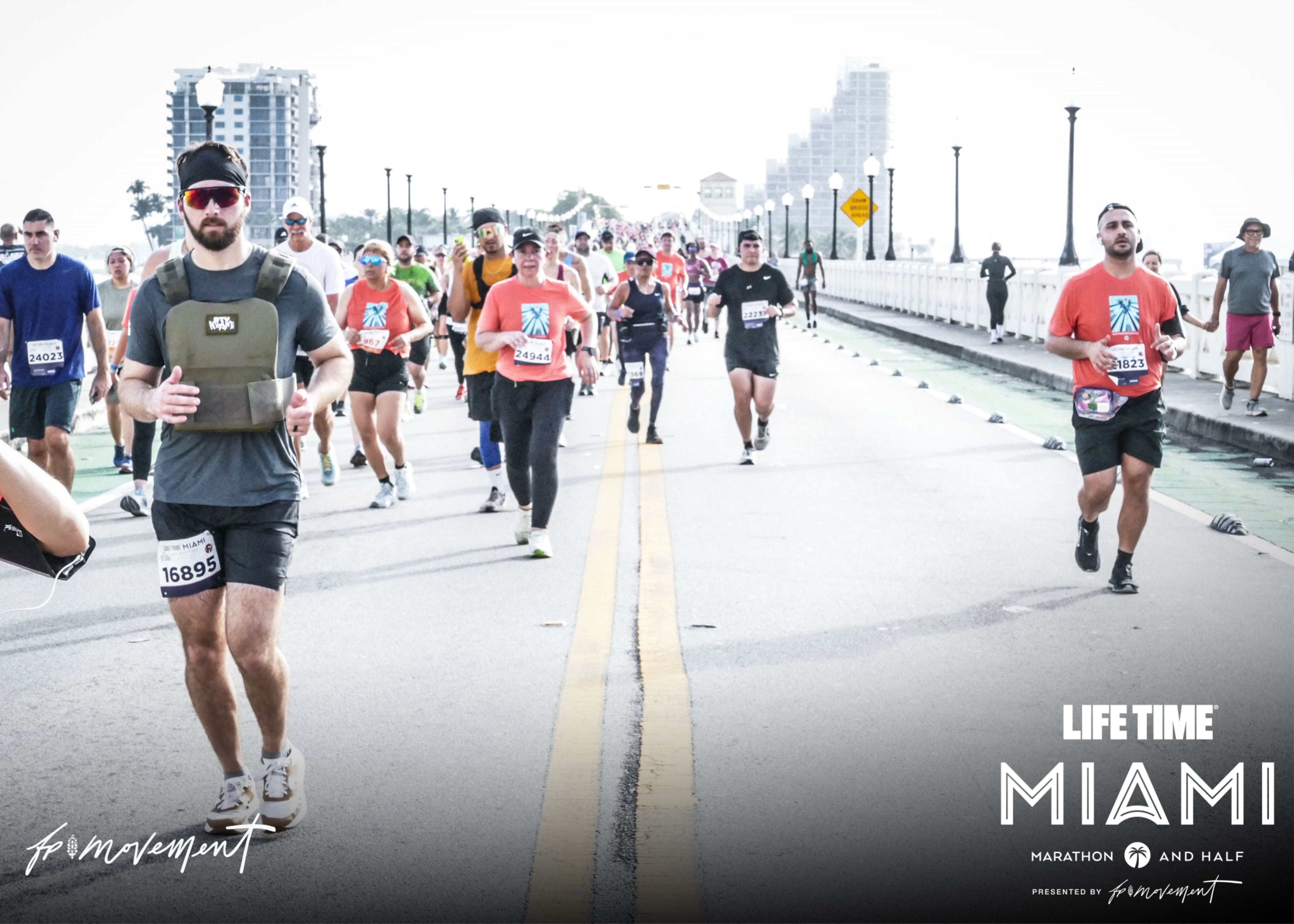
After a few sessions, I was a lot better and more confident in my body going down to Miami. Long story short, I completed the half marathon with my weight vest. It wasn’t pretty, the last few miles were a lot of walking/running intervals, but I still got my medal. It was a proud moment for me. I had overcome an injury and completed the most grueling challenge I had ever endured…at that time. It set the tone for the rest of my year, and I didn’t think about it then, but what I had done was something referred to as a misogi.
The Misogi
I first saw the term misogi while reading The Comfort Crisis by Michael Easter. It’s a Japanese purification ritual that is rooted with the intention of fostering resilience. A misogi challenge is typically something that is very daunting with a 50/50 shot of completion, and the intention of it is to push the challenger to their limits. The outcome is a great sense of accomplishment that builds confidence and sets the tone for the the upcoming year.
Of course, there are plenty of examples of a misogi, but in the end it’s personal to the individual as to what their challenge will be: A rim/rim/rim at the Grand Canyon, giving a TED talk, ascending Mount Kilimanjaro. All three of these are good examples of a misogi, because to some extent they each require a certain level of physical and mental fortitude. The Grand Canyon and Kilimanjaro are physically enduring and require a great sense of mental strength to push through some tough landscapes. Giving a TED talk for the first time is mostly a mental challenge, in terms of speaking in front of strangers, but does require some physical capability to hold yourself together on stage and speak for long periods of time.
After I completed the weighted half marathon, I started to become more intentional about the type of workouts I was doing. The goal in mind was no more lifting as much weight as possible, but choosing movements that felt natural and kept me healthy so I could continue moving everyday without fear of injury. I bought a few simple training sandbags from GORUCK and a giant bag of play sand to fill them up with from the local store. This felt natural, easier on the joints, and I could still feel progress in strength. Paired with the occasional Crossfit workout (depending on the WOD), I felt for the first time in a while that I had a grasp on my physical well being.
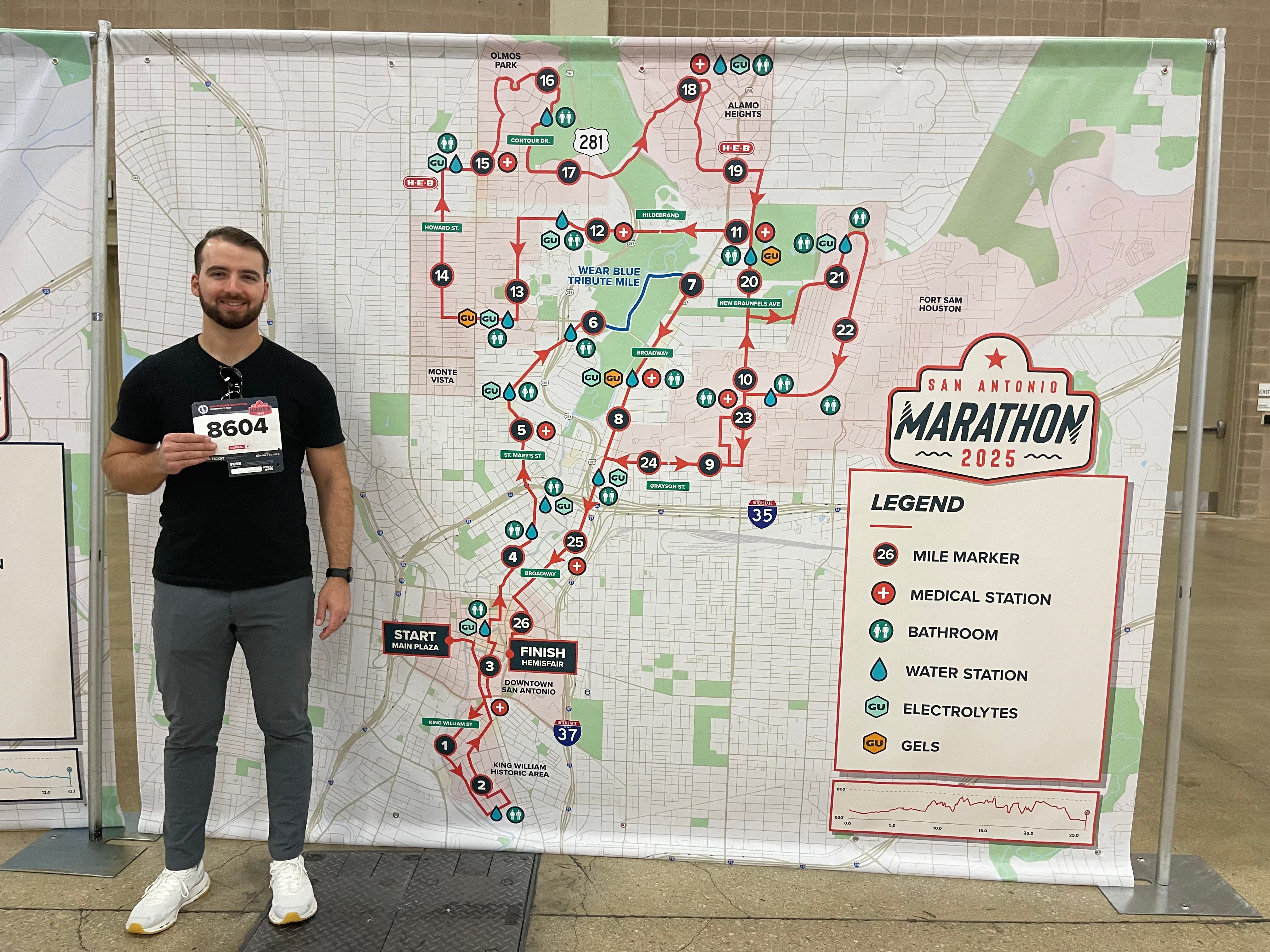
About halfway through the year and feeling better than ever, I decided to sign up and go all in on a challenge I had been pondering for months. My back felt great, I had been running more regularly (even though I’m more of a Walker, ha), and I had incorporated other remedies to help reduce inflammation and stay strong. I felt confident that if I had more time and ability to train, I would have performed better in the half marathon at the beginning of the year down in Miami, opposed to limping across the finish line and feeling like I got hit by a truck. But another weighted half marathon wouldn’t do for me, because it had already been done. I signed up for the San Antonio Marathon, and planned to run the full course…weighted. I would run 26.2 miles with a twenty pound weight vest. This would be my misogi, and to me it made sense. It was daunting, physically/mentally grueling, a 50/50 shot I would finish, but I knew I wouldn't die…hopefully.
The Preparation
My training leading up to the race consisted of three things: Cold plunging, running, and rucking. I purchased a cold plunge earlier in the year, which was significant for my health, especially in reducing inflammation. What I didn’t realize until race day was that the plunge was training me to regulate my breathing under stressful situations. From fast desperate breaths in the beginning to slow deep breaths with experience, cold therapy played a big part in helping me stay in control at all times.
I ruck every day, mostly while walking my dog. Since I was going to be running with a twenty pound weight vest, I wanted to continue rucking with heavier weight (typically 30-45 pounds) to make the weight vest feel as light as possible, and it did. Towards the end of the race my body would notice the additional weight, but I was so used to rucking with heavier weight that an extra twenty pounds (mentally) never felt like it was weighing me down much. It had become a second skin.
Of course I ran regularly, but not as often as you might think. While I certainly could/should have put in more miles, I ended up working my way to only a half marathon in training. This was because I was training with the weight vest, and since I hadn't given myself an appropriate time to prepare, I wanted to be sure my body wasn’t going to have any issues. Sure enough, two weeks before race day my shins were lighting up every time I ran, which prompted me to see my PT and begin taking my shin stretches more seriously.
After getting the shins under control (to include compression sleeves) and purchasing new insoles (game changer), I felt just about as ready as I could be without overdoing it at the time. Kind of like a job interview, going in to that weekend there were things I was thinking that maybe I should done differently. It was the unknown, and I was nervous. I didn’t know if my body was going to hold up, or if I would end up crashed out at the medical tent until somebody could come by and pick me up. Didn’t matter at this point, I had done physically everything I could do. The remaining strength that would carry me across the finish line would be the other piece of the misogi that is probably the most important…my willpower.
The Race
The morning had come. Lindsey Walker and I had chose to stay downtown close to the start line to not worry about a super early start fighting traffic and parking. We had gone out to eat pasta the night before, with what felt like a room full of marathon runners. She set me up with the ultimate spread the morning of to be sure I was ready: bananas, bone broth, protein bars, electrolytes…all this to go along with the six gel packs I would be carrying with me for the race.
I walked down to the start line. I had intentionally made sure to get myself in one of the middle corrals, since I knew I would have no business being anywhere near the front. This was truly a marathon, not a race. I was in it to finish, not be first place. The momentum was building, lots of people, lots of music, lots of energy. I waited with my corral until the gun shot went off, and I was underway.
My game plan was to hold my pace as long as I could, which in my training with the vest was around 12-13 minute miles. I would stop at every drink station to get water. I would down a gel pack every three miles (there were more on the course). I would walk up every hill instead of run, and I would go the bathroom whenever I felt like I had to (which ended up being three times). I adhered to this plan well for most of the race and was overall feeling good…until mile 18.
Right around the time I crossed over the half marathon mark, the course became a series of hills. At first I looked forward to these because I knew it would give me a break from running. But after several hills, and I’m sure to include my extra weight, my quads begin to cramp severely. I walking backwards up hills hitting my quads with my fist to try and keep them loose. I was able to run/walk pretty consistently like this up until around the mile 18 mark, and then it became A LOT of walking.
It felt like a true ruck for the final eight miles. I would try and run occasionally, but after 100 meters or so the cramping would kick in and my legs would feel like they were going to explode. My goal was to finish in the allotted course time, which was seven hours, and I knew based on the pace I was holding at this point it was going to be close. I kept moving, only occasionally stopped to stretch my legs, which inevitably ended up cramping them as well.
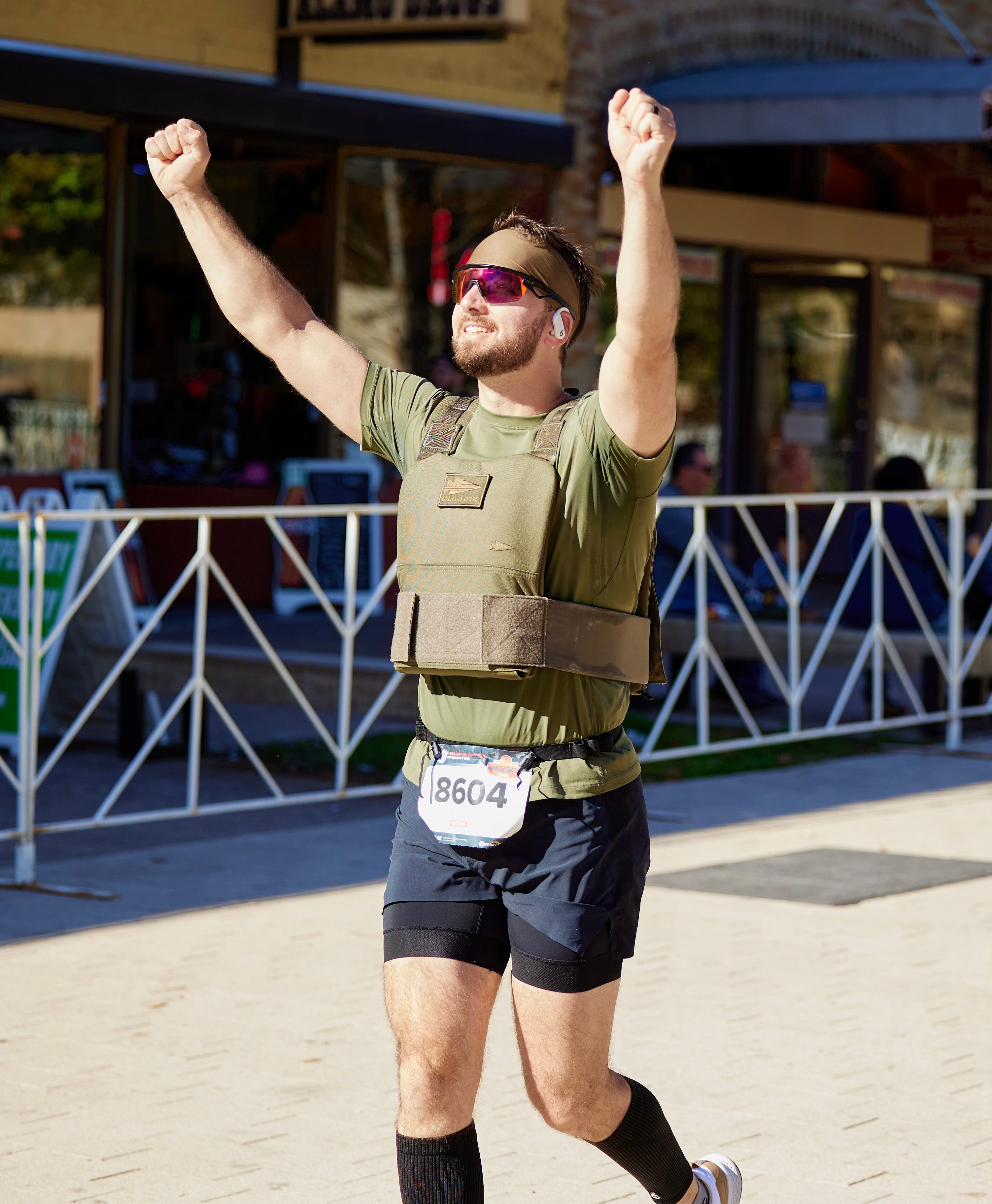
I hear most marathon courses can get pretty quiet between somewhere around the halfway point and the finish, which was mostly true for me. The crowd certainly thinned out between mile 9 and 26. I could feel the energy pick up significantly once I crossed over the 26 mile mark, not only for the crowd noise but my anticipation of being close. It’s hard to put into words the emotion one has when you finally hit the straightaway to the finish line, it’s euphoric. I heard my wife yelling, my legs all of a sudden felt a little better, and before I knew it, I had a medal around my neck. I had finished with just twenty minutes to spare.
The Result
After the race, I sat and had a moment to myself. My wife, the rockstar, had gone to get my post race meal, which included an absurd amount of biscuits that I would only recommend after such an event. It was hard to believe that a year ago my back was so vulnerable that I threw it out helping my grandparents put away their Christmas decorations. Embarrassing, but motivating, I now had accomplished something that very few people in the world had done. Because of the misogi, I had set a goal for myself, and had a purpose.
Tucker Carlson says that “men will do nothing unless they have to, but once they have to, they will do anything”. Men, and humans in general, are at their best when tasked with a challenge. If I hadn’t signed up for the initial half marathon, I would have sat around for a while and wallowed in my pain, not forever, but longer than I should have. It prompted me to set goals, which gave me purpose. I had to rely on others for expertise where I wasn’t as familiar. From my family, my PT(s), to the clerk at the running store fitting me for insoles, the misogi forced me to learn and listen to others better equipped at the body than I am.
I allow myself to go back and relive that moment when I crossed the finish line, it feels great. I don’t use it as an excuse to be a bum, but rather remind myself what I’m capable of. I didn’t just earn a medal, I earned a new set of confidence. The lines have now been pushed out a little farther to continue testing my limits, and to keep challenging myself to be better than yesterday.